
Master of Business Administration
Step into leadership with insight and confidence through a fast, flexible MBA designed for working professionals.




Guide Organizations Through Complexity and Change
Strengthen the strategic judgment required to influence high-stakes decisions at senior levels through case analysis, simulations, collaborative projects, and capstone work. Apply learning to real business challenges while building executive-level expertise across strategy, finance, analytics, leadership, sustainability, and innovation. Develop the confidence to navigate disruption, drive growth, and guide organizational direction and graduate prepared to lead teams, make informed decisions, and create long-term value with credibility, and impact.
Duration
Less Than 2 Years*
*With full course load, year-round study and/or approved transfer credits. Contact an Admissions Advisor for more information.
Tuition – Domestic
$19,950*
to $24,900**
Online and On Campus
Cost per credit: $550
Application fee: $150
*Bachelor’s degree in business.
**Bachelor’s degree not in business.
Total program cost may be reduced when applying applicable transfer credits.
Tuition – International
$37,800*
to $47,250**
On Campus
Cost per credit: $1,050
Application fee: $150
*Bachelor’s degree not in business
$10,000 bursary available.
**Bachelor’s degree in business
$8,000 bursary available.
Total program cost may be reduced when applying applicable transfer credits.
Campus
Toronto & Online
Starts
January, May, September
Your Program. Your Advantage.
Start Your Application
Start Your Application
Admission Requirements
To Apply You Will Need
- Completed online application
- Official bachelor’s degree transcripts with a cumulative GPA of 3.0
- Resume and Statement of Purpose
- Two professional or academic references
- $150 application fee
- Proof of English language proficiency is required, with a TOEFL iBT score of at least 83 on the old scale (0–120) or 4.5 on the new scale (1–6), an IELTS overall score of 6.5 (no band below 6.0), or an equivalent score on another recognized test.
Provisional Admission
If you have a cumulative GPA between 2.5 and 2.99, you may qualify for provisional admission with an eligible GMAT (550) or GRE (157) score. Students admitted provisionally must achieve a minimum cumulative GPA of 2.7 within their first three courses to continue in the program.
Admission Pathways
If you have a bachelor’s degree in business, you may begin with core MBA courses. If your degree is in another field, you may begin with foundation courses before progressing into the core curriculum.
Course Descriptions
Start Your Application
Start Your Application
Program Description
The Master of Business Administration (MBA) program provides students with advanced principles of management for purpose-driven business leaders to think globally, act responsibly, and shape the future of business management. The program is deliberately and thoughtfully designed to cover the essential components of contemporary business practice: Accounting; Finance; Analytics; Leadership; Marketing; Strategy; and Technology. Guided by Yorkville’s Signature Learning Outcomes, the enriched program curriculum exposes students to concepts that require ethical, moral, global, and critical exploration, to help ground strategic decision-making in a contemporary business environment.
3 Credits
This course examines strategic issues in management and the role of responsible business leaders in integrating organizational disciplines. It emphasizes the use of information systems, statistics, and analytical tools for data-driven decision-making. Students apply communication and critical thinking skills to analyze situations and professionally present solutions. The course explores how these capabilities support strategic planning, sustainable management, and organizational excellence.
Prerequisite(s): none
3 Credits
This course introduces accounting and financial reporting systems and the techniques that support effective decision-making. Students apply creative problem-solving and ethical judgment in addressing reporting issues and following the International Financial Reporting Standards. Topics include accounting methods, estimates, and presentations, recognizing the limitations of accounting information systems, analyzing firms’ financial statements, and understanding how financial decisions affect diverse stakeholders.
Prerequisite(s): none
3 Credits
This course explores managerial business economics and the economic fundamentals that inform ethical and responsible decision-making. It examines microeconomic models and tools, along with macroeconomic indicators, policies, and business cycles, designed to stabilize key macroeconomic variables. Topics include supply and demand analysis, forecasting, applying elasticity to revenue estimation, optimal pricing policies, cost and demand theories, and strategic interactions among competitors.
Prerequisite(s): none
Build the Skills to Lead What’s Next
From Expertise to Executive Influence
Build the executive perspective as you connect finance, marketing, analytics, and operations into unified strategy through case analysis, simulations, and collaborative projects that strengthen decision-making under real-world business pressure.
- Work through case-based simulations
- Solve cross-functional business challenges
- Collaborate on strategic projects
Driven by Insight and Impact
Develop the analytical confidence, digital awareness, and strategic adaptability to lead through disruption, integrate ESG and governance into decision-making, and create sustainable long-term value in rapidly evolving global markets.
- Analyze market and business data
- Explore ESG and governance frameworks
- Apply digital transformation strategies
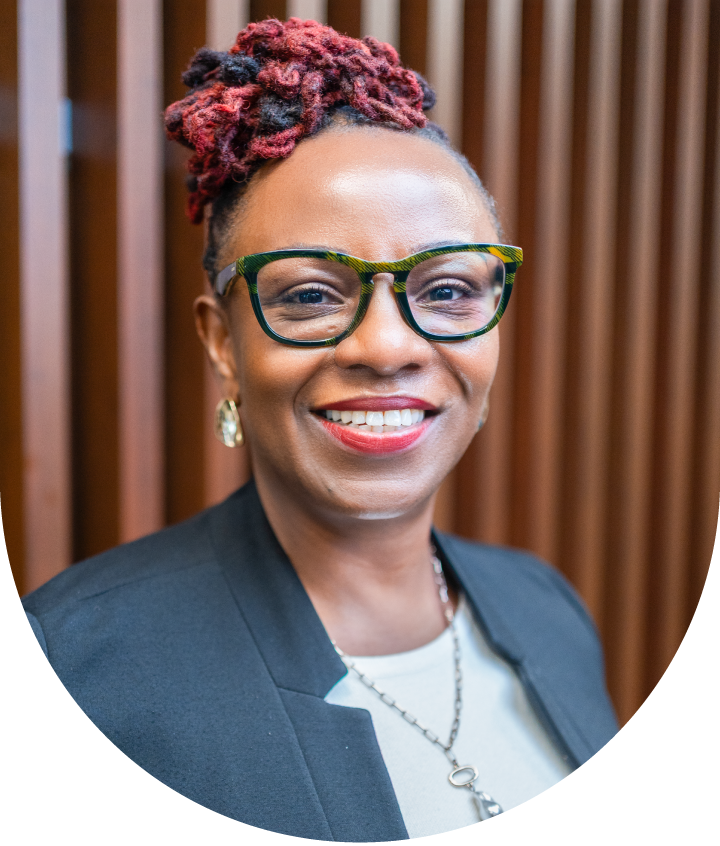
Meet the Dean
Dr. Oluchi Oti is a dynamic business and academic strategist known for her visionary approach and transformative impact in the corporate and education landscape. With a career spanning over two decades, Dr Oluchi has earned a reputation for her keen foresight, innovative problem-solving skills, and a relentless drive for excellence.
Recognized as one of Canada’s Top 100 Black Women to Watch in 2024, Dr. Oti is also a strong advocate for equity, inclusion, and women’s empowerment, bringing real-world leadership insight into the MBA learning experience.
Frequently Asked Questions
Explore answers to common questions. If you don’t see what you’re looking for, connect with an Admissions Advisor for personalized support.
Program Overview
What is the Yorkville University MBA program?
The Master of Business Administration is a graduate business degree designed for working professionals seeking to advance into senior leadership, strategy, finance, consulting, technology, and operations roles.
Is the Yorkville University MBA offered online, on-campus, or in a hybrid format?
The Yorkville University MBA is offered as an on‑campus program in Toronto or an online program. The online option is fully remote. The on-campus option has a flexible, hybrid learning experience that may combine in‑person classes with online coursework and collaboration tools.
Where is the Yorkville University MBA campus located?
The on‑campus MBA program is delivered at Yorkville University’s Toronto campus in Ontario, Canada, a major global business hub with access to leading employers, professional networks, and industry events.
Who is the MBA program best suited for?
The program is ideal for working professionals, career changers, functional specialists, and emerging leaders looking to move into director, vice president, or executive roles.
Can I complete the MBA while working full time?
Yes. The program is designed for working professionals and can be completed 100% online or through a hybrid format with one in-person class day per week in Toronto.
How much time will I need to dedicate to each course?
You should expect to dedicate approximately 15–20 hours per course per week, including readings, assignments, simulations, discussions, and applied projects.
How long does it take to complete the MBA?
Most students complete the MBA in approximately two years of full‑time study, although your exact time to completion may vary based on your course load, transfer credits, and whether you enter through Track 1 or Track 2.
Is the Yorkville University MBA accredited or recognized in Canada?
Yorkville University is a Canadian university offering approved degree programs, and its MBA has been reviewed through provincial quality assurance processes; students should always confirm recognition and professional requirements with relevant employers or licensing bodies.
When can I start the MBA program?
The program has three start dates each year: January, May, and September.
Learning Experience & Career Outcomes
What will I learn in the MBA program?
The curriculum is built across 7 core business disciplines including strategy, finance, analytics, leadership, marketing, technology, and operations, with electives and a capstone project.
How is the Yorkville University MBA different from other MBA programs in Canada?
The Yorkville University MBA is designed as an affordable, purpose‑driven graduate business program that emphasizes ethical leadership, sustainability, and social responsibility alongside core skills in strategy, finance, analytics, and technology.
What teaching methods are used in the MBA?
You will learn through a mix of interactive lectures, case studies, applied projects with real organizations, strategic simulations, and collaborative group work that mirror executive‑level decision‑making.
Will I work on real-world business projects?
Yes. The program includes case studies, strategic simulations, collaborative projects, and capstone work designed to reflect executive-level business decision-making.
What careers can I pursue after graduating?
Graduates may pursue roles such as Vice President, Director, General Manager, Management Consultant, Controller, Investment Banker, Digital Transformation Consultant, and Senior Product Manager.
Will this MBA help me move into leadership roles?
Yes. The program is designed to help professionals move from functional expertise into strategic leadership and executive decision-making roles.
Admissions & Entry Pathways
How do I apply to the MBA program?
You can start your application online through Yorkville University’s website by creating an account, completing the application form, uploading required documents, and connecting with an Admissions Advisor if you need help at any step.
Do I need a business degree to apply?
No. If you have a business degree, you may begin with core MBA courses. If your degree is in another field, you may begin with foundation courses before progressing into the core curriculum.
What are Track 1 and Track 2 pathways?
The MBA offers two admission pathways based on your academic background. Track 1 is designed for applicants with a non-business undergraduate degree and includes foundation coursework. Track 2 is for applicants with a business degree and allows direct entry into the core MBA curriculum.
Is the program available to international students?
Yes. International students may apply to the on-campus MBA program in Toronto and may also be eligible for bursaries and additional admissions support.
What are the admission requirements for the Yorkville University MBA?
Admission requirements typically include an accredited bachelor’s degree, a competitive GPA, a completed online application, a statement of purpose, a resume or CV, references, and proof of English language proficiency for applicants educated in another language.
What documents do I need to apply?
Standard requirements typically include:
- A completed online application
- Official bachelor’s degree transcripts
- Statement of purpose
- Resume or CV
- Two academic or professional references
- Proof of English language proficiency (if applicable)
Can I apply if my GPA is below 3.0?
Yes. Applicants with a GPA between 2.5 and 2.99 may be considered for conditional admission with an eligible GMAT or GRE score.
Can I transfer credits from previous studies?
Transfer credits may be assessed on a case-by-case basis and may reduce your time to completion.
English Language Requirements
What IELTS or TOEFL score do I need to be accepted?
Proof of English language proficiency is required, with a TOEFL iBT score of at least 83 on the old scale (0–120) or 4.5 on the new scale (1–6), an IELTS overall score of 6.5 (no band below 6.0), or an equivalent score on another recognized test.
What other English language tests are accepted?
Yorkville also accepts Duolingo, Pearson Test of English (PTE), CAEL, and other recognized graduate-level proficiency tests.
Tuition & Financial Support
How much does the MBA program cost?
For the most current tuition and fee information, please visit the tuition page or connect with an Admissions Advisor.
Does Yorkville University offer scholarships and bursaries?
Yes. Eligible domestic and international students may qualify for scholarships, bursaries, and financial aid support.
Can I apply for Canadian provincial student loans?
Domestic students may be eligible to apply for provincial student loan programs such as OSAP and other provincial funding options.
Faculty & Student Support
Who teaches the MBA program?
Courses are taught by experienced faculty, academic leaders, and industry practitioners who bring real-world leadership and business expertise into every course.
What student support services are available during the MBA?
Yorkville University offers a range of student success services, including academic advising, tutoring resources, library support, and access to wellness and counselling supports designed to help you succeed throughout your program.
What support is available for online learners?
Students have access to technical support, library resources, academic services, and Admissions Advisor throughout their learning journey.
Is disability or accessibility support available?
Yes. Yorkville University provides accessibility and accommodation support for eligible students through Student Services.
How do I request academic accommodations?
Students who need accommodations can contact the Accessibility and Academic Accommodations Office, complete a confidential intake form, and provide supporting documentation so that a personalized accommodation plan can be developed.
Is support available outside regular business hours?
Some services, such as online resources and 24/7 support programs, may be available to students outside traditional office hours; details are provided on the Student Success Centre and resources page.
What if I have more questions?
If you cannot find your question on this page, you can contact an Admissions Advisor, who will be happy to help.
Latest News
View All
View All







Faculty
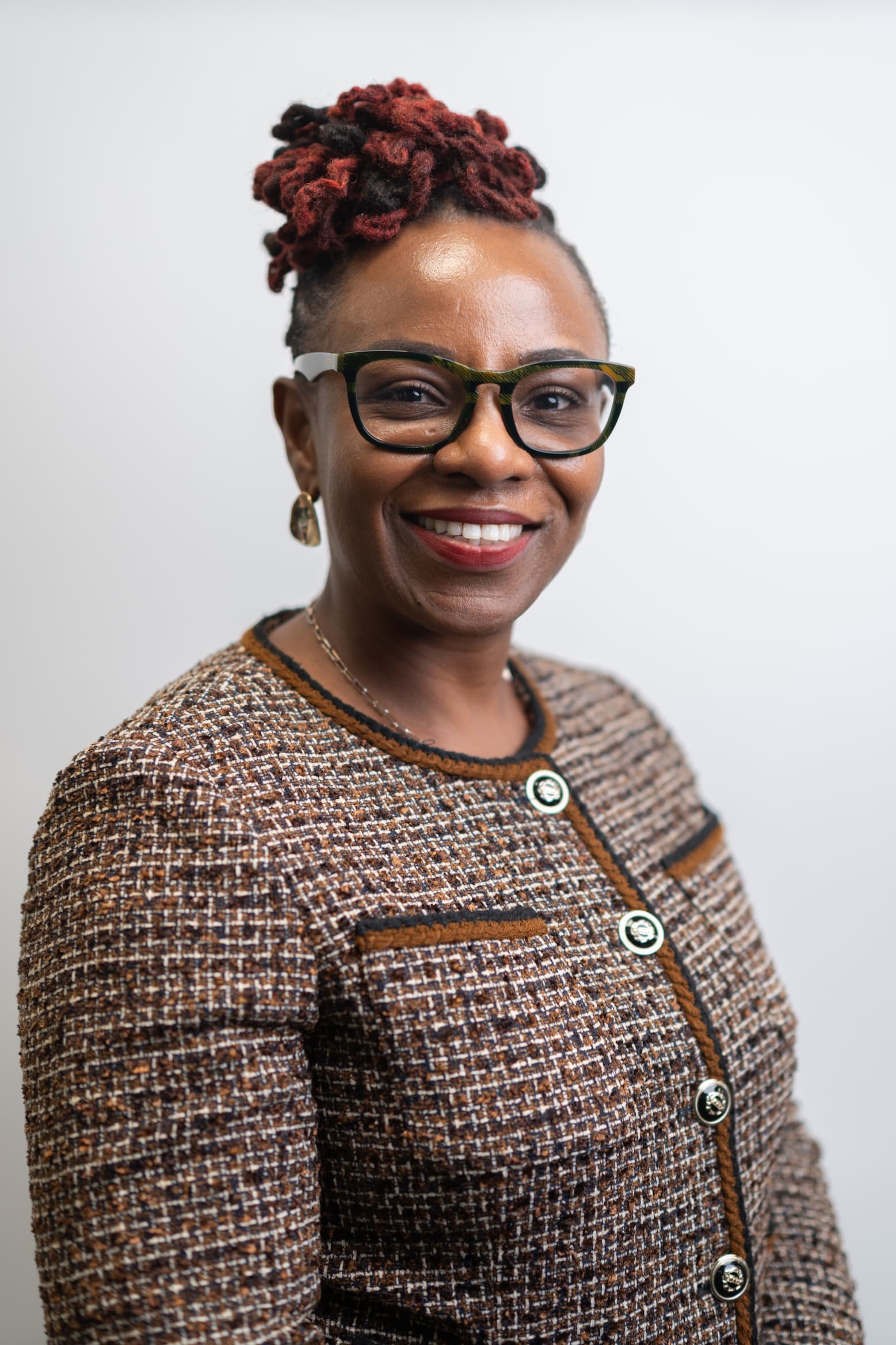
Meet the Dean
Oluchi Oti is a dynamic business and academic strategist known for her visionary approach and transformative impact in the corporate and education landscape. With a career spanning over two decades, Dr Oluchi has earned a reputation for her keen foresight, innovative problem-solving skills, and a relentless drive for excellence.
Beyond her consultancy roles, she champions a holistic approach to business strategy, emphasizing innovation, sustainability, and organizational resilience in a rapidly evolving global economy. Her commitment to driving strategic initiatives that foster long-term success and stakeholder value continues to set benchmarks in the business and education community.
Motivated by a desire to drive systemic change, she transitioned into education leadership, leveraging her industry expertise to inform strategic programs and decision-making. She currently serves as the inaugural Program Chair – Project Management at Yorkville University leading ~250 diverse faculty educating ~5000 students. In recognition of her contributions, Dr Oluchi has received numerous industry accolades, including a recent recognition of her leadership by Mayor of Brampton, Patrick Brown and as Canada’s top 100 black women to watch of 2024.
Beyond classrooms and boardrooms, Oluchi as a person living with a physical disability, is a vocal advocate for equity, diversity, inclusion and women empowerment. Oluchi’s commitment to diversity has been instrumental in fostering inclusive workplace cultures while driving financial success. Her leadership continues to inspire a new generation of diverse leaders to pursue excellence and effect meaningful change in the project management and business world.