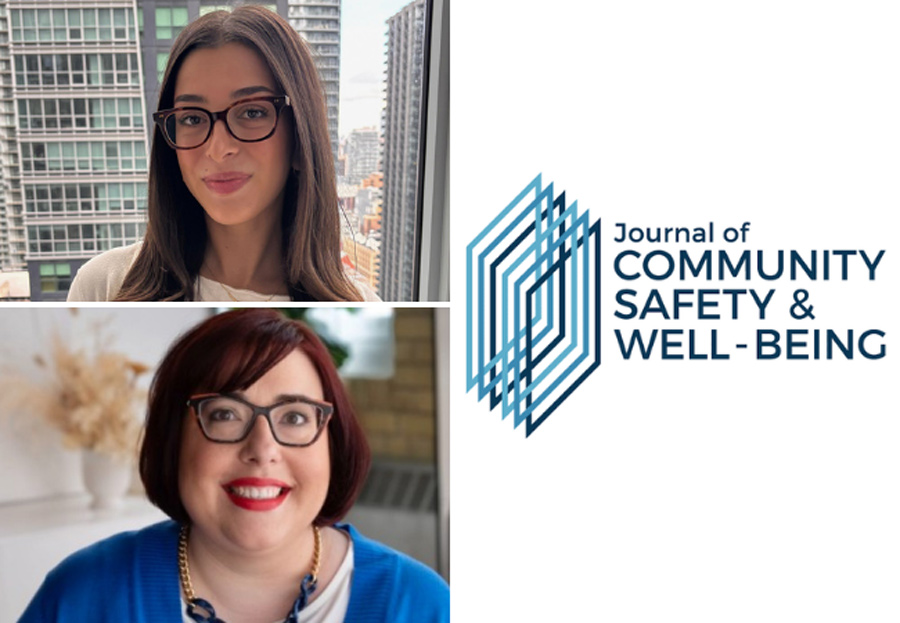
As more young people turn to artificial intelligence (AI) for mental health support, Yorkville University Master of Arts in Counselling Psychology (MACP) student Julia Bertucci is exploring the implications of that shift through research informed by her volunteer experience in crisis support.
.
Bertucci volunteers with Distress Centres of Greater Toronto (DCGT), a local operator within Canada’s 9-8-8 Suicide Crisis Helpline network. Her conversations with young people have raised questions about why they turn to AI for support and what that could mean for youth mental health.
.
“While volunteering on the National Suicide Hotline, I’ve spoken with many kids and teenagers who’ve told me they confided in chatbots like ChatGPT for mental health support,” Bertucci said. “They said they appreciated the accessibility and the less intimidating nature of chatting compared to speaking to a person.”
.
These experiences prompted Bertucci to consider the potential implications of AI for youth mental health, including its effects on empathy, cognitive processing and human interaction. Her interest led to a research collaboration with Dr. Rosina Mete, Yorkville University’s Director of Scholarly and Mental Health Initiatives for the MACP program.
.
Together, Bertucci and Mete co-authored Where artificial intelligence meets youth mental health: An invitation to engage with a concerning new landscape, published in the Journal of Community Safety and Well-Being on September 22, 2026.
.
Exploring the Intersection of AI and Youth Mental Health
.
In their commentary, Bertucci and Mete examine AI’s growing role in young people’s lives, particularly the potential risks when these tools are used as a substitute for human connection or professional mental health care.
.
“I hope this encourages deeper reflection on how quickly AI is becoming an integral part of our daily lives and the potential risks it poses to those who rely on it as a replacement tool, especially when it comes to mental health support,” Bertucci said.
.
For Mete, the growing presence of AI makes it important for counselling professionals to understand how young people are using these tools and what that means for their well-being.
.
“Today, AI is embedded in almost everything we access electronically. For youth, as a vulnerable population, if they are relying on generative AI for mental health support, it’s important for counselling professionals to be aware,” Mete said.
.
“This phenomenon could even lead to research on different types of mental health support. Youth generally may be more comfortable with text-based support when they first experience a mental health concern.”
.

Turning a Passion for Mental Health into Published Research
.
The commentary grew out of Bertucci’s interest in exploring the questions she encountered through her volunteer work and her desire to contribute to research on youth mental health. She approached Mete to learn more about research and the publication process, leading to conversations about crisis intervention and the role of AI in mental health support.
.
Mete recognized Bertucci’s potential and encouraged her to develop her ideas into a published commentary.
.
“She is a clinician who will keep learning throughout her career. I recognized her potential when we first met. She explained that she wanted to enhance her MACP experience by contributing to the literature in a meaningful and mindful way,” Mete said. “Her strengths include her ability to reflect, analyze, and be open to feedback. Her writing skills were evident when we started to brainstorm ideas for an article based on her interests.”
.
For Bertucci, the experience of collaborating with Mete – which included brainstorming and planning the article, then working through feedback and edits – offered her an opportunity to contribute to a subject she cares deeply about while learning how to bring her ideas to a wider audience.
.
“From our first meeting, Dr. Mete was incredibly encouraging. She gave me a safe space to explore my research ideas and offered valuable mentorship and information on transforming my thoughts into shareable writing,” Bertucci said. “She truly helped me open up and build my confidence, enabling me to share my passionate work with others.”
.
Publishing the commentary encouraged Bertucci to continue exploring the topic, while meeting journal editor Norm Taylor further motivated her to pursue research.
.
Mete hopes the experience has helped Bertucci build confidence in her ability to contribute to scholarly conversations while remaining open to learning and feedback.
.
“I hope that Julia feels confident in her abilities, supported in her research, and proud of her work,” Mete said. “I hope she gained knowledge of the publication process, a deeper understanding of AI’s impact (both benefits and challenges in youth mental health), and the confidence to share her ideas while staying open to feedback and continued growth.”
.
Supporting the People Who Support Others
.
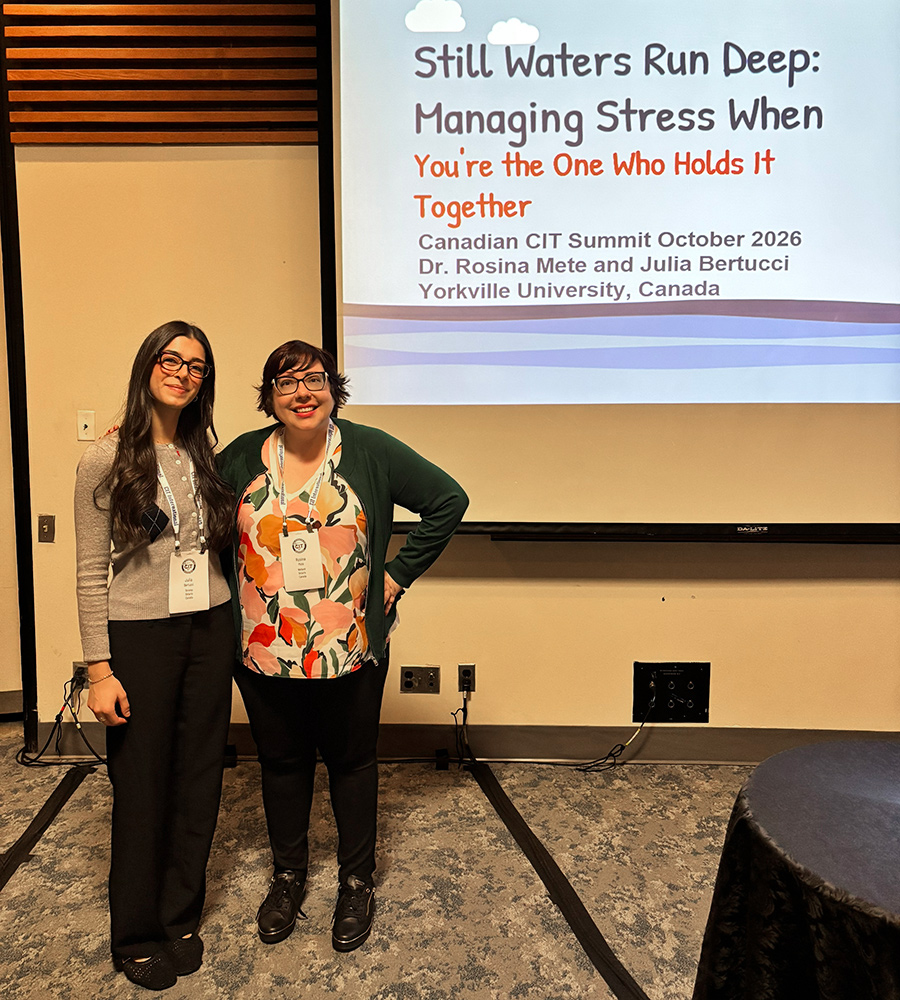
In addition to their work on AI and youth mental health, Bertucci and Mete also presented at the Canadian Crisis Intervention Team (CIT) Summit 2026 in Hamilton on October 19. Their presentation, Still Waters Run Deep: Managing Stress When You’re the One Who Holds It Together, focused on stress and burnout among crisis responders and strategies for managing the demands of helping others.
.
“Attendees learned about stress and burnout symptoms and how they impact crisis responders. We introduced the foundational framework of ACT (Acceptance and Commitment Therapy), a third-wave cognitive therapy,” Mete said.
.
The presentation explored practical ACT strategies, including cognitive defusion, which helps people create distance from difficult thoughts, and values-based action. In one exercise, participants imagined a difficult thought being spoken in the voice of a cartoon character, comedian or movie star.
.
The summit gave Bertucci the opportunity to share a frontline perspective on the challenges faced by people working in crisis response.
.
“I was honoured that Dr. Mete asked me to speak. My experience as a crisis worker gave me a unique perspective on the mental health challenges faced by crisis workers and first responders,” Bertucci said.
.
“Vicarious trauma, depersonalization, and compassion fatigue are serious symptoms of burnout in the helping professions. I hope the participants at the conference were able to take away insights and tools to help mitigate these symptoms through the lens of Acceptance and Commitment Therapy.”
.
Continuing the Conversation
.
Bertucci is currently completing her practicum as a psychotherapist intern at True Balance Psychotherapy in downtown Toronto, where she works with adolescent and adult clients.
.
After her practicum, she plans to pursue additional certifications to deepen her understanding of youth mental health and continue exploring the role of AI in mental health support. She also hopes to continue writing and publishing, building on the experience of contributing to the commentary.
.
For other MACP students interested in research, Bertucci recommends starting with the issues that matter most to them.
.
“Focus on the mental health areas that truly ignite your passion,” she said. “I believe what makes this field so special is the unique nature of each clinical setting and the passion of its practitioners.”