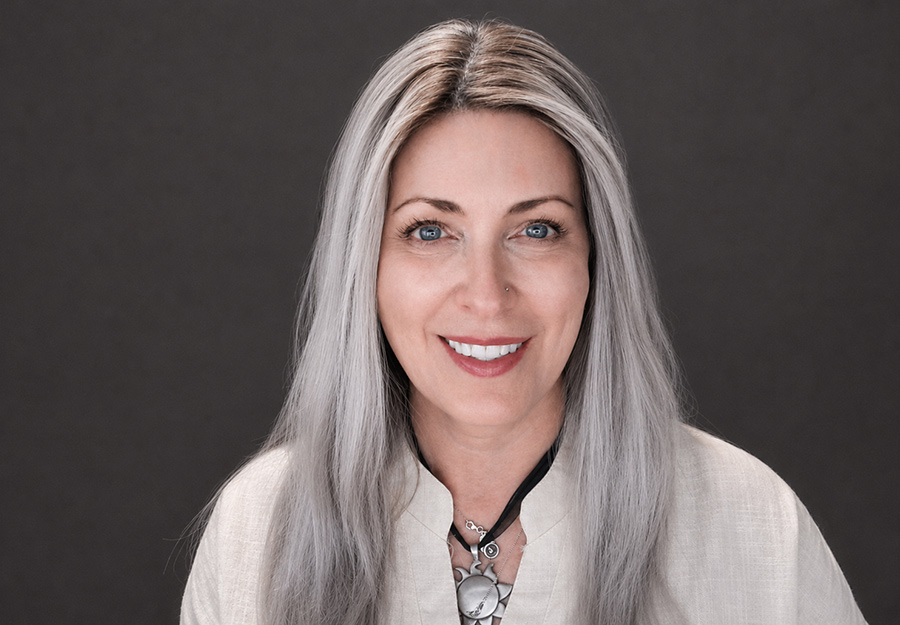
Lisa Porter has spent her entire career asking more of herself.
.
As a secondary school counsellor supporting 400 students when she began her studies at Yorkville University, she was already doing meaningful work – but a desire to grow, to better serve emerging professionals, and to engage more broadly with her field led her to Yorkville’s Doctor of Counselling and Psychotherapy program.
.
Porter completed her doctoral studies at Yorkville while working full time, stepping into an Associate Director role at City University in Canada, and co-authoring the 2025 textbook, School Counselling in Canada.
.
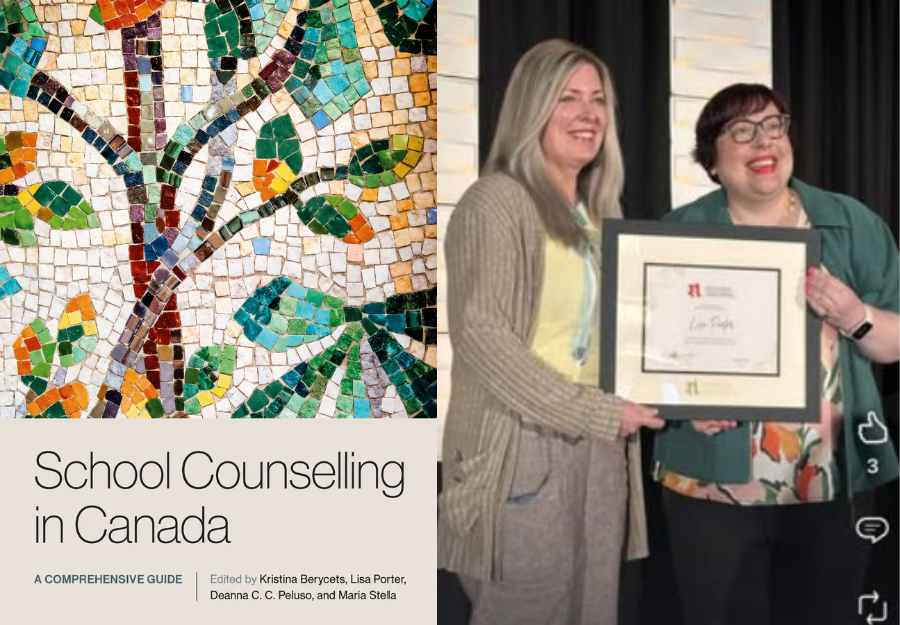
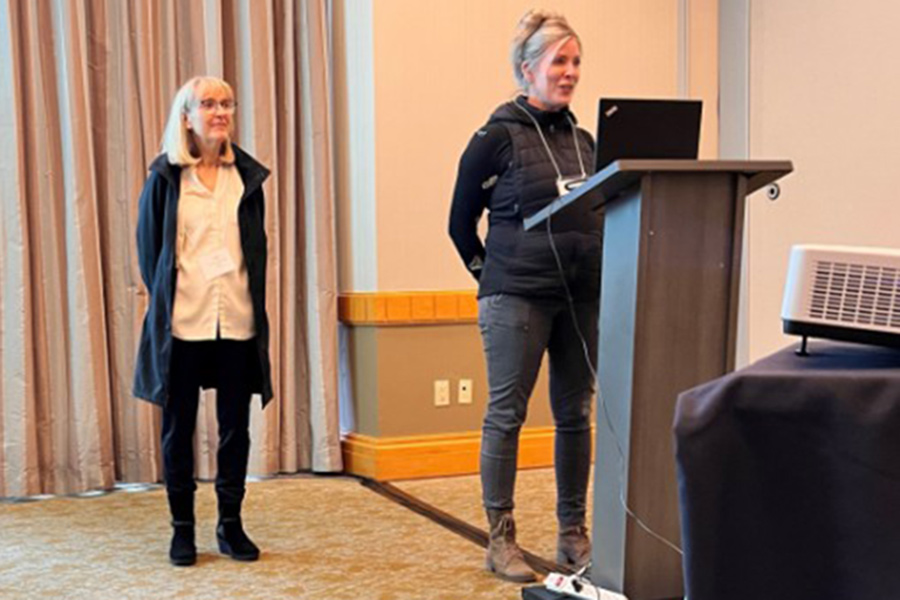
During her time at Yorkville, she also had the opportunity to present her research at national conferences including the Canadian Society for the Study of Higher Education and the Canadian Counselling and Psychotherapy Association (CCPA) – where she was recently recognized with the CCPA’s 2026 Doctoral Dissemination Award.
.
As one of this year’s Student Graduation Speakers at Yorkville’s upcoming convocation celebrations in Fredericton, Porter brings to the stage a voice shaped by decades of practice, scholarly rigour, and a deep commitment to preparing the next generation of counsellors.
.
She recently sat down to discuss her Yorkville journey, her motivations, and the advice she’d pass on to incoming students. Here’s what she had to say:
.

What brought you to Yorkville University? Where were you in your life/career when you decided to continue your studies with us?
.
When I started my doctoral studies at YU, I was working as a school counsellor in a busy high school with 400 young people on my caseload. I loved the work and felt privileged to support young people through some of the most important moments of their lives. And, after ten years in the profession, I was looking for a new challenge and an opportunity to continue growing in the field.
.
At the same time, I had begun supervising and mentoring new counsellors, while teaching a college-level internship course. I wanted to deepen my knowledge and skills so that I could better support emerging professionals as they developed confidence and competence. I was looking for a doctoral program that would allow me to continue working full time while engaging in academic study, and YU’s flexible structure made that possible. It offered the opportunity to strengthen my practice and to stretch myself intellectually and professionally.
.
Almost immediately upon starting Yorkville’s DCP program, I was offered an Associate Director position at a local university and eagerly stepped into an entirely new professional chapter. I began teaching master’s-level counselling courses and became immersed in higher education. What started as a desire to grow as a practitioner quickly expanded into passion for teaching, mentoring, and supporting the development of future counsellors. The timing was excellent – my doctoral studies and new leadership role developed simultaneously, each enriching the other in meaningful ways. Upon completion of my DCP program, I have also been welcomed as a sessional instructor at YU and am greatly looking forward to taking on this new adventure.
.
What made you decide to pursue your Doctor of Counselling and Psychotherapy?
.
Over the course of my career, the counselling profession has continued to evolve in important ways. More than ever, counsellors need to be prepared to consider how culture, identity, power, privilege, systemic barriers, and our own positionality impact our clients’ experiences and our own work as practitioners. I wanted my diverse teen clients to have a positive counselling experience with me, to feel validated, respected, and understood as cultural beings whose lives are shaped by unique and intersecting identities. Pursuing doctoral studies gave me the opportunity to deepen my understanding of these complex issues, challenge my own assumptions, and become more intentional in how I approached counselling, supervision, and counsellor education. I also wanted to engage with the counselling profession more broadly. Beyond direct client work, I hoped to contribute through teaching, mentoring, leadership, and scholarship. The DCP program provided the depth, challenge, and critical reflection opportunities I was seeking at this stage of my career.
.
What is the most important thing you’re taking away from your studies at Yorkville University?
.
One of the most valuable aspects of the program has been the opportunity to learn alongside colleagues who brought diverse professional, cultural, and personal perspectives to our discussions. Those conversations challenged me to think differently and broadened my understanding of counselling and psychotherapy, while simultaneously inviting me to ask critical questions and define my own values more clearly. The program reinforced my value for humility in professional practice. The faculty at YU modelled great respect for the complexity of the work we do and the importance of remaining curious, reflective, and open to growth. I leave the program with an even deeper appreciation for the lifelong learning that our profession requires.
.
What are your plans after graduation, both immediate and long term?
.
I am excited about my ongoing work in higher education as both an administrator and as a faculty member. I am passionate about advocating for the counselling profession through teaching, writing, and mentorship. As a standing contributor to Canadian School Counsellor Magazine, I work to highlight the important role counsellors play in supporting students’ mental health, wellbeing, and academic success. Looking ahead, I hope to contribute further through scholarly research. I am interested in supporting future counsellors to work ethically, thoughtfully, and responsively within an increasingly diverse and complex society. Ultimately, my goal is to strengthen the profession by supporting the development of competent, reflective practitioners who can make a meaningful difference in the lives of those they serve.
.

If you offered one piece of advice to an incoming student, what would that be?
.
I strongly encourage incoming students to put work into connecting with your peers beyond course work. The support, advice, and connections made here can sustain you when things get challenging. Use your strengths to support others generously as you work through the program, and when you find yourself needing some support, reach out with a spirit of trust. Connect with the faculty too; they are leaders in this field. Attend the non-mandatory sessions with your ASP advisor and learn from watching peers who are ahead of you in the program. Immerse yourself in the culture of the program and of doctoral studies as early as you can. It takes time to learn the language, and learning it early forms a stronger foundation for your research.