
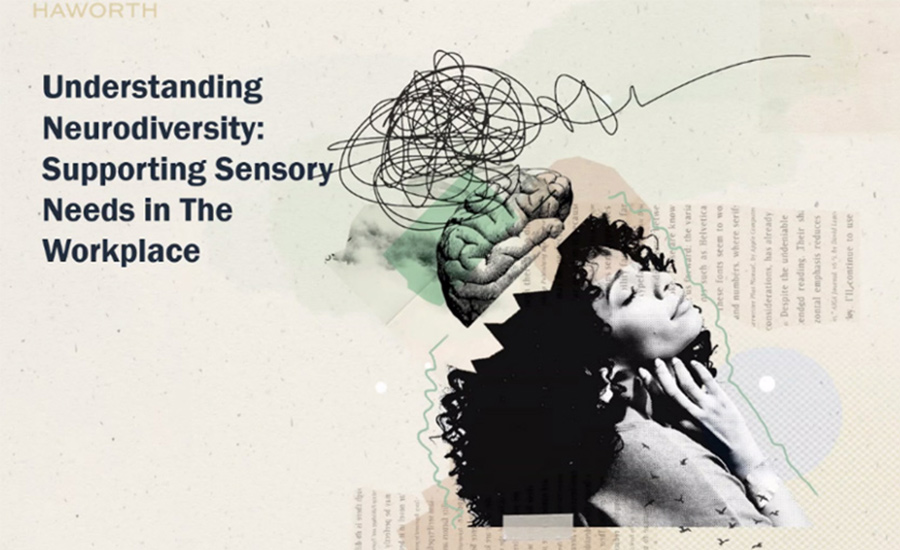
Design Insights recently hosted an inspiring Continuing Education Unit (CEU) presentation in collaboration with Haworth entitled Understanding Neurodiversity: Supporting Sensory Needs in the Workplace. The event brought together educators, designers, industry professionals, and Bachelor of Interior Design students at Yorkville University to explore how thoughtful design can create more inclusive, supportive work environments for neurodiverse individuals.
.
Haworth is a global leader in innovative workspace furniture manufacture and a research-driven design company headquartered in Michigan. Today, it operates in more than 120 countries and works closely with architects and interior designers to shape modern work environments. They invest heavily in human-centered design research, which helps shape industry standards and design education. This CEU presentation with Haworth demonstrates how industry research, academic teaching and professional practice intersect.
.
We bring these insights into the classroom, so our design students are better equipped to create spaces that support productivity, wellbeing and a broader range of human experiences.
.
The session also highlighted the ongoing Research Ethics Board (REB)-approved research of BID faculty member Michele Bertussi, whose work examines how neurodiversity-informed strategies can be integrated into studio-based design education. This research is helping to prepare the next generation of designers to create environments that are not only functional and beautiful, but also responsive to the diverse sensory and cognitive needs of the people who inhabit them. Notably, prof. Bertussi presented her findings during the Interior Designers Educators Council (IDEC) Symposium in October 2025.
.
Throughout the presentation, participants were encouraged to rethink the role of designers as agents of change – professionals whose work shapes how people learn, collaborate, and thrive. The discussion introduced emerging guidelines that rely on similar research to guide workplace strategies for clients.
.
Drawing from both professional practice and academic research, the CEU demonstrated how studio-based learning environments can cultivate a deeper understanding of how individuals perceive and experience space. By embracing evidence-based design approaches, students and practitioners can develop strategies that reduce sensory overload, increase spatial flexibility, and promote wellbeing and productivity across diverse workplaces.
.
Key Highlights:
.
Inclusive Design Principles
Participants explored why inclusive workplace design is essential for supporting a broad spectrum of users and experiences.
.
Neurodiversity Awareness
The session introduced the concept of neurodiversity and illuminated the barriers neurodivergent individuals often encounter in traditional work environments.
.
Sensory Systems and Spatial Experience
Attendees examined how lighting, acoustics, colour, and visual stimuli influence comfort, focus, and performance within interior spaces.
.
Evidence-Based Design Strategies
Practical approaches were shared to support accessibility, balance sensory input, and promote mental wellbeing in workplace settings.
.
Design Education and Research
Insights from REB-approved research illustrated how studio-based learning can empower future interior designers to embed neurodiversity into their professional practice.
.
By bridging research, education, and professional collaboration, this CEU exemplified the growing leadership of the BID program in advancing inclusive design. The session encouraged our emerging designers to envision workplaces that celebrate diversity, foster productivity, and support a culture of belonging for all.